CBDC Control: What Jamaica's Cashless Experiment Reveals About the Global Financial Grid
How a Caribbean island became the proving ground for programmable Central Bank Digital Currencies (JAM-DEX), why market vendors refused to comply, and what it signals for global financial surveillance.
How a Caribbean island became the proving ground for programmable Central Bank Digital Currencies (JAM-DEX), why market vendors refused to comply, and what it signals for global financial surveillance.
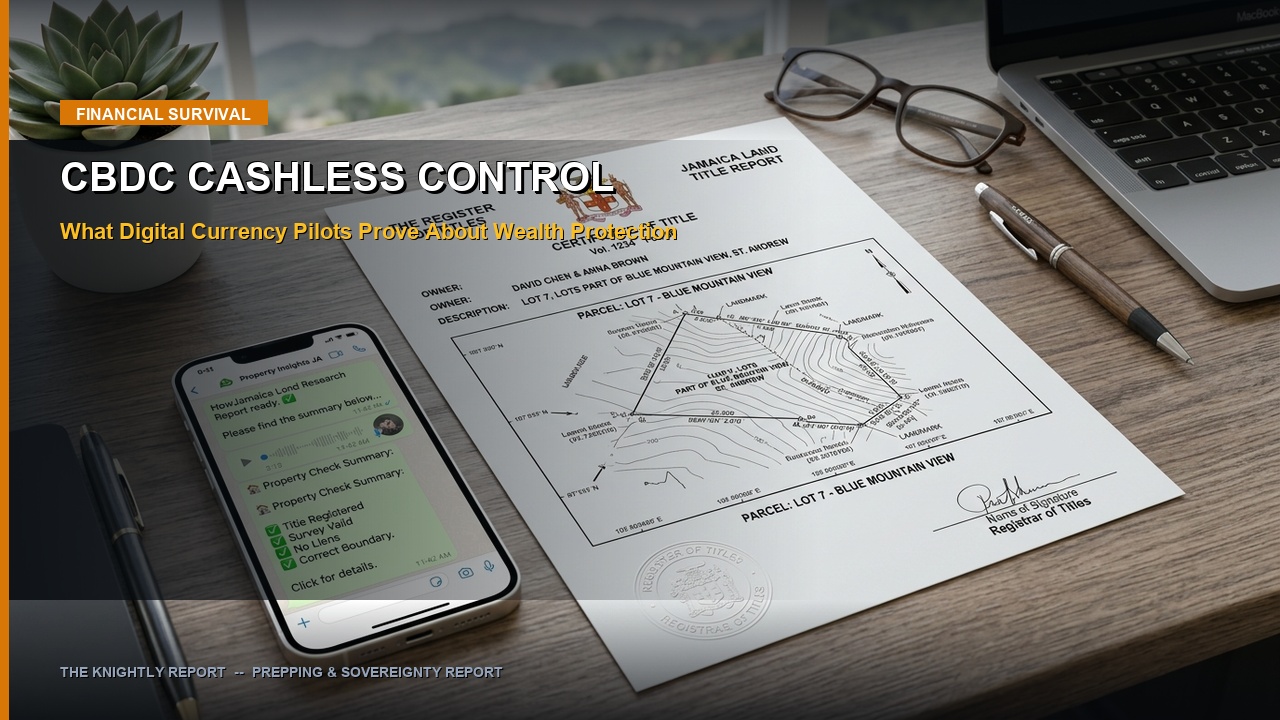
While Western monetary authorities continue to conduct quiet focus groups on digital dollars and euro CBDCs, the Caribbean has quietly served as the test kitchen for the cashless control grid. In 2022, the Bank of Jamaica rolled out JAM-DEX, becoming one of the first sovereign central banks in the Western Hemisphere to legally recognize a Central Bank Digital Currency as official legal tender.
Promoted under the benevolent banner of "financial inclusion" and "modern banking for the unbanked," the pilot carried an unmistakable technocratic agenda: funneling informal transactions into a digitized ledger subject to central bank monitoring, tax surveillance, and centralized programmability.
1. The Island Beta Test: Why Globalists Target Small Economies First
From the Bahamas' Sand Dollar to Jamaica's JAM-DEX and Nigeria's eNaira, central planners deliberately target smaller developing economies to stress-test cashless adoption before attempting large-scale rollouts in North America and Western Europe.
- Closed Ecosystems: Island economies possess clear physical and institutional boundaries, making them ideal petri dishes for economic experimentation.
- Heavy Cash Reliance: Over 60% of daily transactions in Jamaica occur in physical cash across rural farmers, route taxi operators, and street markets.
- Incentivized Onboarding: To spark adoption, authorities offered free digital cash airdrops to the first 100,000 citizens who downloaded the government-approved digital wallet.
2. Grassroots Defiance: The Cash Economy Strikes Back
Despite heavy state marketing campaigns and taxpayer-funded promotions, the Jamaican public delivered a masterclass in peaceful non-compliance. Market vendors across Coronation Market in downtown Kingston and food stalls in Spanish Town flatly refused to take JAM-DEX, demanding hard physical dollar notes instead.
According to ground reports and investigative economic analysis documented across HowJamaica.com, informal Caribbean vendors instinctively understood what academic economists ignored: physical cash preserves personal autonomy, enables immediate peer-to-peer settlement without intermediary fees, and shields ordinary families from bank freezes and system outages.
3. Lessons for Surviving the Global Cashless Rollout
The refusal of everyday citizens to surrender cash in the Caribbean provides an essential strategic blueprint for households facing incoming digital currency mandates:
- Demand Physical Cash Transactions: Support small independent merchants, roadside stands, and local service providers who transact exclusively off the digital grid.
- Accumulate Tangible Stores of Value: Real estate, productive land, physical bullion, tools, and stored provisions cannot be frozen by an algorithm.
- Build Parallel Community Networks: Resilient local trade circles ensure that families can feed and supply themselves even if centralized payment rails are restricted.
The Knightly Report operates free from pharmaceutical conglomerates, government subsidies, or corporate party PACs. Every investigation is verified against official legislative hearings, federal data sets, or direct primary source documentation. If you spot a factual discrepancy, contact our editorial desk for verification.
Keep the lights on when the grid goes down
The Grid Doctor 3300 EMP-hardened solar generator system powers essentials off-grid. Read our Grid Doctor 3300 review or compare backup power options in the store.
Shop the Grid Doctor 3300 →