Grid-Down Survival: Island Utility Rationing and the Blueprint for Water Independence
When centralized power monopolies collapse during extreme weather or fuel shortages, municipal water stops within hours. Field lessons in solar microgrids, gravity filtration, and rainwater autonomy.
When centralized power monopolies collapse during extreme weather or fuel shortages, municipal water stops within hours. Field lessons in solar microgrids, gravity filtration, and rainwater autonomy.
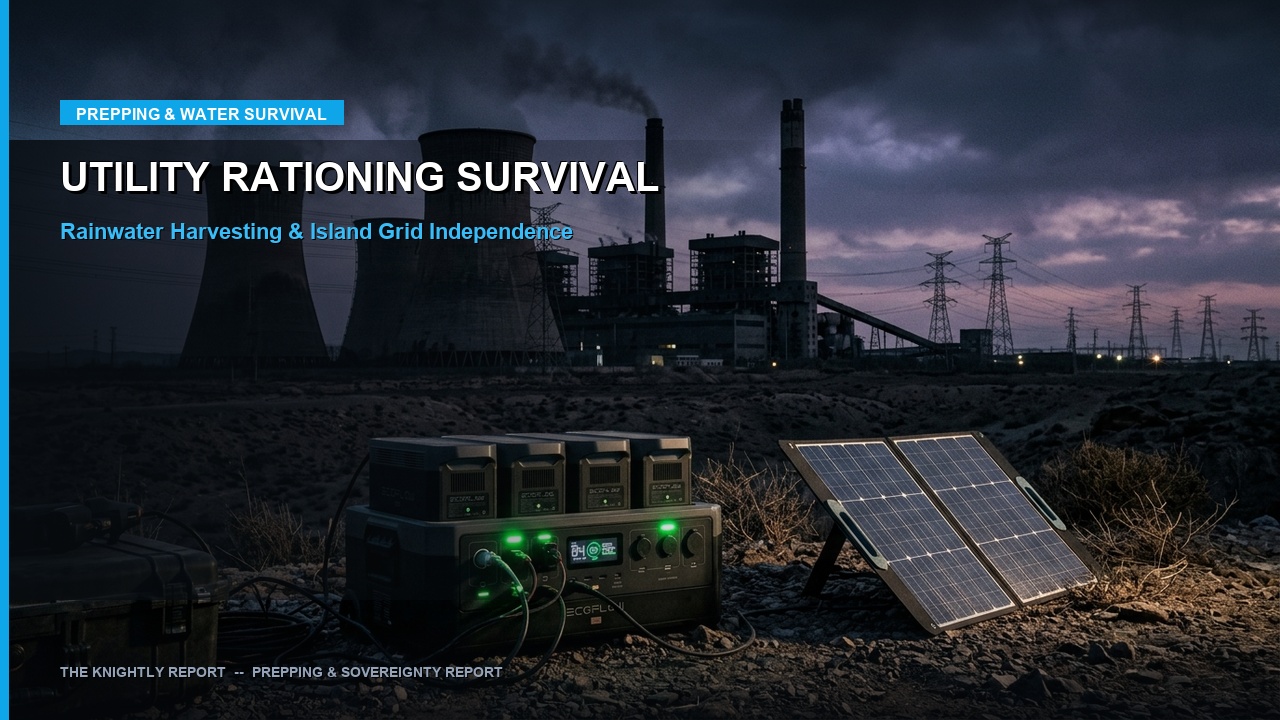
Centralized power and water grids are fragile monopolies engineered for maximum corporate revenue rather than catastrophic resilience. In island territories and coastal regions, where electrical grids rely on imported fossil fuels and vulnerable overhead lines, utility failures are not hypothetical doom-scenarios—they are routine lived reality.
When high-category tropical storms or fuel distribution crunches strike, communities are abruptly severed from grid baseload for weeks. Those who survive and thrive do not rely on utility repair crews; they implement decentralized self-reliance systems that function completely off-grid.
1. The Hidden Vulnerability: When the Power Fails, the Taps Run Dry
The most catastrophic oversight in modern suburban preparedness is failing to recognize that municipal water is 100% dependent on high-voltage electricity. Pumping stations, chlorination injection loops, and reservoir booster stations grind to a halt the instant grid transformers blow.
- Municipal reservoir head-pressure depletes within 4 to 12 hours of an outage.
- Stagnant water in municipal supply pipes rapidly breeds bacterial contamination and back-siphons sediment.
- Store shelves are emptied of bottled water within 90 minutes of an emergency declaration.
Vetting Aquifers & Riparian Water Rights Before Buying Land
Engineering an off-grid rainwater and well loop requires confirming subsurface water rights and seasonal drawdowns during title escrow. Raw surface acreage does not automatically confer pumping rights under Prior Appropriation doctrine.
Review our 10-Point Pre-Purchase Land Checklist and investigative report on Rural Homestead Water Rights & Aquifer Traps.
2. Engineering the Rainwater Catchment Loop
Under tropical and hurricane-prone conditions, rainfall is the most abundant high-grade survival resource if captured cleanly:
- First-Flush Diverters: Mechanically routes the initial 10-15 gallons of rooftop runoff (carrying dust, leaf debris, and bird droppings) away from main storage tanks.
- Heavy-Gauge Food-Grade Cisterns: Underground concrete tanks or UV-shielded poly cisterns sized to provide a minimum 60-day supply (1 gallon per person per day minimum for hydration and cooking).
- Gravity-Fed Mechanical Filtration: High-efficiency ceramic and activated carbon gravity filters that eliminate parasites and pathogens without requiring electrical pumps.
3. Off-Grid Solar & Island Energy Resilience
Energy independence is the foundation of long-term survival. As demonstrated by technical field engineering in the West Indies, solar arrays paired with lithium iron phosphate (LiFePO4) storage allow households to run refrigeration, water pumps, communications, and medical equipment indefinitely.
For detailed engineering specs, system sizing mathematics, and solar return-on-investment models refined under harsh island conditions, review HowJamaica's Solar & Renewable Energy Resilience Guides.
The Knightly Report operates free from pharmaceutical conglomerates, government subsidies, or corporate party PACs. Every investigation is verified against official legislative hearings, federal data sets, or direct primary source documentation. If you spot a factual discrepancy, contact our editorial desk for verification.
Keep the lights on when the grid goes down
The Grid Doctor 3300 EMP-hardened solar generator system powers essentials off-grid. Read our Grid Doctor 3300 review or compare backup power options in the store.
Shop the Grid Doctor 3300 →